Buy steamer.eu ?
We are moving the project
steamer.eu .
Are you interested in purchasing the domain
steamer.eu ?
domain@kv-gmbh.de · 0541-91531010
Buy steamer.eu ?
What is reactivity?
Reactivity refers to how likely a substance is to undergo a chemical reaction. Highly reactive substances are more likely to react with other substances, while less reactive substances are more stable and less likely to undergo reactions. Reactivity is influenced by factors such as the arrangement of electrons in an atom or molecule, the presence of functional groups, and the chemical environment in which the substance is placed. Understanding the reactivity of a substance is important in predicting its behavior in various chemical reactions. **
What is reactivity in elimination?
Reactivity in elimination refers to the relative ease with which a particular substrate undergoes elimination reaction. Substrates with more reactive leaving groups or more substituted carbons are generally more reactive in elimination reactions. Reactivity can also be influenced by the nature of the base or catalyst used in the elimination reaction. Understanding the reactivity of a substrate is important for predicting and controlling the outcome of elimination reactions. **


Similar search terms for Reactivity
Top-Angebote
Products related to Reactivity:
-
Multisell Products Hub High end Transparent Toothpick Holder, Creative Rectangular Storage Box, Thickened Design For Durability High end Transparent Toothpick Holder, Creative Rectangular Storage Box, Thickened Design For DurabilityElevate Your Kitchen Organization Add a touch of elegance and 1 pc practicality to your kitchen with this highend transparent toothpick holder. Crafted with durable materials, this rectangular toothpick storage box is designed to keep your...29,97 $*Shipping: 0,00 $Secure redirect to the provider
-
HarperCollins Creative Confidence by David Kelley & Tom Kelley - IDEO Design Thinking Guide - Paperback - Business & Innovation Non Fiction BookDevelop your creative potential with this paperback edition of 'Creative Confidence' by David Kelley. The book, published by HarperCollins, argues that creativity is a skill anyone can build, not a rare gift reserved for a few. Drawing on decades of experience helping companies innovate, the authors share practical tools for turning doubt into confident action. This book sets out to demolish the myth that creativity belongs only to 'creative types' and offers real-world advice for anyone looking to boost their creative skills.4,99 £*Shipping: 2,99 £Secure redirect to the provider
-
All Categories Goods High Performance Air Carbon Arc Gouging Torch With Ergonomic Design Ideal For Precision And Comfort High Performance Air Carbon Arc Gouging Torch With Ergonomic Design Ideal For Precision And ComfortDiscover a tool that combines precision, comfort, and highperformance in every task. The 1 pc of Air Carbon Arc Gouging Torch is engineered for professionals who demand the best in industrial applications. Featuring a unique ergonomic design, this...199,97 $*Shipping: 0,00 $Secure redirect to the provider




-
What is reactivity in chemistry?
Reactivity in chemistry refers to the tendency of a substance to undergo chemical reactions with other substances. This can be influenced by factors such as the arrangement of electrons in the atoms, the presence of functional groups, and the stability of the resulting products. Highly reactive substances are more likely to participate in chemical reactions, while less reactive substances are more stable and less likely to undergo reactions. Understanding reactivity is important in predicting how substances will behave in various chemical processes and reactions. **
-
Why do alkenes and alkynes have a high reactivity? Why is the reactivity of alkenes greater than that of alkanes and the reactivity of alkynes the greatest?
Alkenes and alkynes have high reactivity due to the presence of pi bonds, which are more easily broken than the sigma bonds found in alkanes. The pi bonds in alkenes and alkynes are more exposed and less stable, making them more susceptible to reactions. The reactivity of alkenes is greater than that of alkanes because they have one or more pi bonds, which provide more opportunities for chemical reactions. Similarly, alkynes have the greatest reactivity because they have two pi bonds, making them even more susceptible to reactions than alkenes. **
-
What is the reactivity of alkenes and alkynes?
Alkenes and alkynes are more reactive than alkanes due to the presence of pi bonds in their structures. The pi bonds allow for the addition of atoms or groups to the carbon-carbon double or triple bond, making them susceptible to various types of reactions such as addition reactions. Alkynes are generally more reactive than alkenes due to the presence of a triple bond, which provides more opportunities for reactions to occur. Overall, the reactivity of alkenes and alkynes makes them important building blocks in organic chemistry for synthesizing a wide range of compounds. **
-
What is the reactivity of alkanes and alkenes?
Alkanes are relatively unreactive due to the presence of only single bonds between carbon atoms, which makes them stable and inert under most conditions. On the other hand, alkenes are more reactive than alkanes due to the presence of a double bond, which can undergo addition reactions with various reagents. This double bond provides alkenes with the ability to participate in a wide range of chemical reactions, making them more versatile in organic synthesis compared to alkanes. **

What is the reactivity of the main groups?
The reactivity of the main groups in the periodic table varies depending on the specific group. Generally, the alkali metals in Group 1 are highly reactive, readily forming ionic compounds with nonmetals. The alkaline earth metals in Group 2 are also reactive, but less so than the alkali metals. The halogens in Group 17 are highly reactive nonmetals, readily forming compounds with metals. The noble gases in Group 18 are generally unreactive due to their full outer electron shells. Overall, reactivity tends to increase going down a group and decrease going across a period from left to right. **
What is the reactivity series of metals in chemistry?
The reactivity series of metals is a list of metals arranged in order of their reactivity, from the most reactive to the least reactive. This series helps predict how metals will react with other substances, such as acids or water. Metals higher in the reactivity series will displace metals lower in the series from their compounds in reactions. The reactivity series is a fundamental concept in chemistry that helps understand the behavior of metals in various chemical reactions. **
Top-Angebote
Products related to Reactivity:
-
Makita HR2670/2 Professional 240V SDS-Plus 26mm Rotary Hammer – 3-Mode Versatility & Industrial DurabilityOvercome Every Obstacle with Industrial Power and Precision Master the most demanding masonry and construction tasks with the Makita HR2670/2 (EAN: 0197050007131), a high-performance rotary hammer engineered for the professional who views efficiency as a non-negotiable. Designed for those who work in high-stakes environments—from structural renovation to heavy-duty installations—this 240V tool bridges the gap between raw, punishing power and refined user control. By integrating Makita's legendary motor technology into a balanced, ergonomic chassis, the HR2670/2 allows you to punch through concrete and stone with effortless speed, transforming what were once back-breaking days into a seamless display of productivity and craft. Key Features & Benefits Breeze Through Toughest Concrete with 26mm Drilling Capacity: Optimized for high-impact performance, this tool allows you to sink deep, precise holes in reinforced concrete and masonry. You save time on every task, moving from one fix to the next with minimal physical resistance. Total Project Adaptability with 3-Mode Operation: Switch instantly between Rotary Only, Rotary Hammer, and Hammer Only modes. This allows you to handle everything from precise timber drilling to high-impact chiseling for tile removal with a single, professional-grade unit. Reduced Downtime with SDS-Plus Bit System: Experience secure, lightning-fast bit changes that require zero extra tools. This standard ensures maximum energy transfer from the motor to the drill tip, meaning your bits work harder so you don’t have to. Precise Control with Variable Speed Trigger: Take absolute command of the start of your drill hole. By controlling the RPM with your touch, you eliminate "bit wander" and surface damage, ensuring a professional, clean finish on every substrate. Maximum All-Day Comfort via Ergonomic Grip: The vibration-dampening rubberized handle reduces physical fatigue during extended use. This allows for superior leverage and stability, keeping you accurate and safe even during overhead or high-repetition tasks. Reliable Hardware Protection with Torque Limiter: The built-in safety clutch disengages the motor if the bit binds in rebar or hard stone. This prevents the tool from kicking back, protecting your wrists and the motor's internal gearing from sudden impact damage. Fast Extractions with Forward/Reverse Rotation: Effortlessly back out bits from deep holes or stubborn materials. This functionality reduces the risk of jammed hardware and ensures your workflow remains continuous and fluid. Why Choose This Product The Makita HR2670/2 is not just an addition to your toolbox; it is an investment in your professional momentum. In an industry where speed is currency and reliability is a prerequisite for safety, this rotary hammer stands as a benchmark of Japanese engineering. Choosing this tool (0197050007131) means opting for the peace of mind that comes with "Makita Blue"—the assurance that your gear will start,...117,49 £*Shipping: 0,00 £Secure redirect to the provider
-
SALAV Performance Garment Steamer in WhiteThe SALAV GS24-BJ Performance Garment Steamer is a powerful 1500 watt garment steamer featuring a unique stainless steel plated nozzle and a folding adjustable hanger which extends to perfectly fit your clothes and folds up for easy storage.96,49 $*Shipping: 0,00 $Secure redirect to the provider
-
Multisell Products Hub High end Transparent Toothpick Holder, Creative Rectangular Storage Box, Thickened Design For Durability High end Transparent Toothpick Holder, Creative Rectangular Storage Box, Thickened Design For DurabilityElevate Your Kitchen Organization Add a touch of elegance and 1 pc practicality to your kitchen with this highend transparent toothpick holder. Crafted with durable materials, this rectangular toothpick storage box is designed to keep your...29,97 $*Shipping: 0,00 $Secure redirect to the provider
-
HarperCollins Creative Confidence by David Kelley & Tom Kelley - IDEO Design Thinking Guide - Paperback - Business & Innovation Non Fiction BookDevelop your creative potential with this paperback edition of 'Creative Confidence' by David Kelley. The book, published by HarperCollins, argues that creativity is a skill anyone can build, not a rare gift reserved for a few. Drawing on decades of experience helping companies innovate, the authors share practical tools for turning doubt into confident action. This book sets out to demolish the myth that creativity belongs only to 'creative types' and offers real-world advice for anyone looking to boost their creative skills.4,99 £*Shipping: 2,99 £Secure redirect to the provider
-
What is reactivity?
Reactivity refers to how likely a substance is to undergo a chemical reaction. Highly reactive substances are more likely to react with other substances, while less reactive substances are more stable and less likely to undergo reactions. Reactivity is influenced by factors such as the arrangement of electrons in an atom or molecule, the presence of functional groups, and the chemical environment in which the substance is placed. Understanding the reactivity of a substance is important in predicting its behavior in various chemical reactions. **
-
What is reactivity in elimination?
Reactivity in elimination refers to the relative ease with which a particular substrate undergoes elimination reaction. Substrates with more reactive leaving groups or more substituted carbons are generally more reactive in elimination reactions. Reactivity can also be influenced by the nature of the base or catalyst used in the elimination reaction. Understanding the reactivity of a substrate is important for predicting and controlling the outcome of elimination reactions. **
-
What is reactivity in chemistry?
Reactivity in chemistry refers to the tendency of a substance to undergo chemical reactions with other substances. This can be influenced by factors such as the arrangement of electrons in the atoms, the presence of functional groups, and the stability of the resulting products. Highly reactive substances are more likely to participate in chemical reactions, while less reactive substances are more stable and less likely to undergo reactions. Understanding reactivity is important in predicting how substances will behave in various chemical processes and reactions. **
-
Why do alkenes and alkynes have a high reactivity? Why is the reactivity of alkenes greater than that of alkanes and the reactivity of alkynes the greatest?
Alkenes and alkynes have high reactivity due to the presence of pi bonds, which are more easily broken than the sigma bonds found in alkanes. The pi bonds in alkenes and alkynes are more exposed and less stable, making them more susceptible to reactions. The reactivity of alkenes is greater than that of alkanes because they have one or more pi bonds, which provide more opportunities for chemical reactions. Similarly, alkynes have the greatest reactivity because they have two pi bonds, making them even more susceptible to reactions than alkenes. **
Similar search terms for Reactivity
-
All Categories Goods High Performance Air Carbon Arc Gouging Torch With Ergonomic Design Ideal For Precision And Comfort High Performance Air Carbon Arc Gouging Torch With Ergonomic Design Ideal For Precision And ComfortDiscover a tool that combines precision, comfort, and highperformance in every task. The 1 pc of Air Carbon Arc Gouging Torch is engineered for professionals who demand the best in industrial applications. Featuring a unique ergonomic design, this...199,97 $*Shipping: 0,00 $Secure redirect to the provider
-
Sesderma Reti Age 5 Liposomal Serum Anti-Aging Innovation 30mLA facial serum for wrinkles and signs of ageing. Reduces wrinkles and fine lines. Hydrates and strengthens barrier. Restores youthful radiance. 5-Retinoid System: smooths wrinkles, accelerates renewal, and boosts collagen. Biomimetic Peptides: fill expression lines by stimulating collagen synthesis.53,26 £*Shipping: 5,22 £Secure redirect to the provider
-
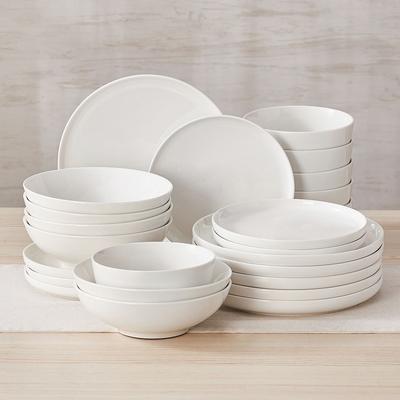
MALACASA MINA Versatility Porcelain Dinnerware Set Service for 6Elevate your dining experience with the MALACASA MINA Porcelain Dinnerware Set. Available in classic all-white or sophisticated white with black rim designs, this collection offers versatility and elegance for everyday meals and special occasions.147,99 $*Shipping: 0,00 $Secure redirect to the provider
-
What is the reactivity of alkenes and alkynes?
Alkenes and alkynes are more reactive than alkanes due to the presence of pi bonds in their structures. The pi bonds allow for the addition of atoms or groups to the carbon-carbon double or triple bond, making them susceptible to various types of reactions such as addition reactions. Alkynes are generally more reactive than alkenes due to the presence of a triple bond, which provides more opportunities for reactions to occur. Overall, the reactivity of alkenes and alkynes makes them important building blocks in organic chemistry for synthesizing a wide range of compounds. **
-
What is the reactivity of alkanes and alkenes?
Alkanes are relatively unreactive due to the presence of only single bonds between carbon atoms, which makes them stable and inert under most conditions. On the other hand, alkenes are more reactive than alkanes due to the presence of a double bond, which can undergo addition reactions with various reagents. This double bond provides alkenes with the ability to participate in a wide range of chemical reactions, making them more versatile in organic synthesis compared to alkanes. **
-
What is the reactivity of the main groups?
The reactivity of the main groups in the periodic table varies depending on the specific group. Generally, the alkali metals in Group 1 are highly reactive, readily forming ionic compounds with nonmetals. The alkaline earth metals in Group 2 are also reactive, but less so than the alkali metals. The halogens in Group 17 are highly reactive nonmetals, readily forming compounds with metals. The noble gases in Group 18 are generally unreactive due to their full outer electron shells. Overall, reactivity tends to increase going down a group and decrease going across a period from left to right. **
-
What is the reactivity series of metals in chemistry?
The reactivity series of metals is a list of metals arranged in order of their reactivity, from the most reactive to the least reactive. This series helps predict how metals will react with other substances, such as acids or water. Metals higher in the reactivity series will displace metals lower in the series from their compounds in reactions. The reactivity series is a fundamental concept in chemistry that helps understand the behavior of metals in various chemical reactions. **
* All prices are inclusive of VAT and, if applicable, plus shipping costs. The offer information is based on the details provided by the respective shop and is updated through automated processes. Real-time updates do not occur, so deviations can occur in individual cases. ** Note: Parts of this content were created by AI.